Leave Your Message

Which China Top Saw Discs Are Best for Global Buyers?

Choosing the right Saw Discs for global purchasing requires more than comparing prices or polished product photos. Buyers must examine cutting material, disc diameter, arbor size, segment design, operating speed, cooling requirements, and expected service life. A disc designed for reinforced concrete may perform poorly on granite or ceramic panels. The details matter.

“Performance begins with the correct match between the disc, the machine, and the material,” says Dr. Luca Ferri, an independent cutting-tool specialist. His point sounds simple. It is often ignored. Many purchasing teams focus on initial cost, while overlooking vibration, uneven segments, slow cutting, and replacement delays. A cheaper disc can become expensive beside a stalled production line.

This guide explores which China-made Saw Discs may suit international buyers. It considers diamond concentration, bond hardness, core stability, welding quality, packaging, technical documentation, and supplier consistency. Reliable manufacturers should provide measurable specifications, practical test data, and responsive after-sales support. Certificates can strengthen confidence, but they do not replace real cutting trials.

There is no universal winner. A disc that cuts dense marble smoothly may struggle with abrasive concrete. Regional voltage, machine types, shipping conditions, and local maintenance habits also influence results. That makes selection less perfect than many product pages suggest. Buyers should request samples, confirm tolerances, and compare cutting speed against usable life. Careful testing usually reveals more than a dramatic sales claim.
Which China Top Saw Discs Are Best for Global Buyers?

What Defines a High-Quality China Top Saw Disc?

Which China Top Saw Discs Are Best for Global Buyers?

What Defines a High-Quality China Top Saw Disc?

A high-quality saw disc begins with accurate engineering, not attractive packaging. Experienced buyers inspect the carbide tips, steel body, bore size, and tooth geometry before placing large orders. The disc should run smoothly with minimal vibration during cutting. Small details matter.

Material consistency is equally important. A balanced steel plate helps reduce noise and heat buildup. Properly brazed or laser-welded teeth should remain secure after repeated cuts. For woodworking, clean tooth profiles can reduce splintering. For metal applications, tooth hardness and heat resistance require closer attention. The correct choice depends on the material, machine speed, and feed rate.

Reliable manufacturers should provide measurable data, including diameter tolerance, kerf width, recommended RPM, and material specifications. Buyers can request sample discs and inspect cut surfaces, tooth wear, and runout with basic measuring tools. Measure twice. A disc that performs well for ten cuts may still fail during continuous production. Packaging also deserves attention, because loose teeth or moisture exposure can damage an otherwise precise product.

Traceable batch numbers and consistent inspection records strengthen supplier reliability. However, certificates alone do not prove performance. Real cutting tests remain essential. Some buyers focus too heavily on the lowest price, and that can be a costly mistake. I would still compare several samples before approving a long-term order.
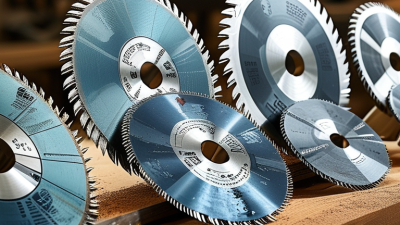

Which Saw Disc Types Suit Different Cutting Materials?

Selecting the best saw disc starts with the material, not the machine. A disc that cuts clean timber may overheat on aluminum. It may also leave rough edges on laminated boards. Matching tooth design, abrasive grade, and cutting speed reduces waste and improves control.

For solid wood, carbide-tipped discs with alternate top bevel teeth provide clean crosscuts and steady rip cuts. Fewer teeth remove chips quickly during thick timber work. More teeth produce smoother edges in furniture panels. Plywood and MDF often need fine-tooth discs with anti-splinter geometry. Small errors here can create visible tear-out.

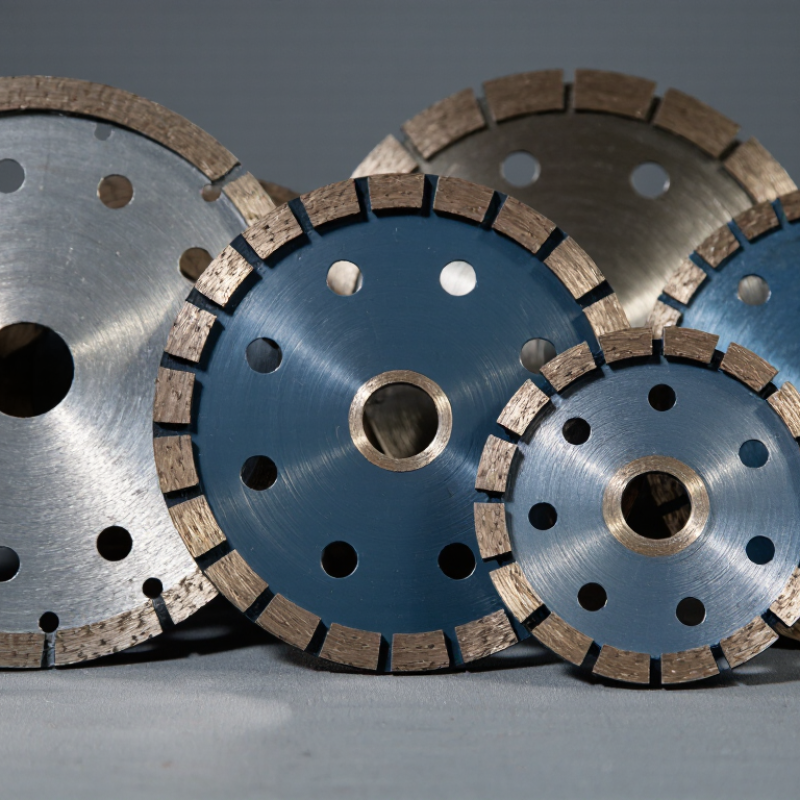
Aluminum requires a sharp non-ferrous metal disc, controlled feed pressure, and suitable lubrication where permitted. Steel needs a reinforced abrasive disc or a dedicated metal-cutting disc. Concrete, brick, and stone generally require diamond segments, while ceramic tile benefits from a continuous-rim diamond disc. Use a thin kerf disc for delicate sheet materials, but check its heat resistance first. Composite panels remain difficult because their surfaces and cores behave differently. I would test one offcut before production. Disc descriptions can sound precise, yet actual results change with saw alignment, material moisture, and operator technique. Always verify the arbor size, maximum RPM, guard compatibility, and cutting direction before installation.

How to Evaluate China Top Saw Disc Manufacturers

Choosing the best China top saw discs starts with evaluating the manufacturer, not the catalog price. A polished website proves little. Buyers should inspect production experience, engineering ability, and quality records before placing a trial order.

Ask how the factory controls steel body flatness, diamond segment consistency, welding temperature, and final runout. A reliable manufacturer should explain each step clearly. Request material certificates, inspection reports, and batch traceability documents. These details matter. During my own supplier evaluations, sample discs sometimes looked identical but performed differently after several concrete cuts. A controlled test on the buyer’s actual material can reveal this problem quickly. Measure cutting speed, edge quality, vibration, and segment wear. Record the results.

Communication also shows technical maturity. Can the manufacturer recommend a suitable diameter, arbor size, segment design, and operating speed? Do engineers respond with measurements, or only general promises? Check packaging, delivery controls, replacement policies, and response times after the sale. Factory audits and third-party inspections add confidence, especially for larger orders. However, no checklist is perfect. A smaller supplier may offer strong craftsmanship but weaker documentation. That weakness should be discussed, not ignored. The safest decision balances tested performance, transparent evidence, stable capacity, and practical service. Fancy claims are not enough.

Which China Top Saw Discs Are Best for Global Buyers? - How to Evaluate China Top Saw Disc Manufacturers

Evaluation Dimension Industry-Recognized Reference Range What High-Quality Manufacturers Usually Provide Documents or Tests Global Buyers Should Request Buyer Evaluation
Blade Diameter Approximately 100–800 mm for common industrial circular saw applications Stable production across standard and custom diameters, with clear operating-speed limits Technical drawing, dimensional inspection report, maximum RPM marking, and sample approval record Essential
Cutting Material Carbide-tipped teeth for wood, panel, plastic, and non-ferrous metal applications; diamond segments or tips for masonry and mineral materials Material-specific tooth geometry and grade selection rather than one universal tooth formulation Carbide or diamond specification, material certificate, tooth-brazing or segment-bonding procedure Essential
Tooth Geometry Common designs include alternate top bevel, triple-chip grind, flat top, and combination tooth patterns Geometry matched to feed speed, material hardness, required surface finish, and cutting direction Tooth-profile drawing, rake and clearance-angle data, application test results, and recommended feed parameters High Priority
Steel Body Quality Hardened and tensioned tool-steel bodies are commonly used for professional circular saw blades Controlled hardness, accurate tensioning, low runout, and resistance to thermal deformation Steel grade certificate, hardness test, flatness report, radial runout measurement, and tensioning inspection Essential
Kerf and Plate Thickness Typical kerf approximately 1.2–5.0 mm, depending on diameter, application, and tooth design Consistent kerf width, correct plate-to-tip proportion, and low material waste without sacrificing stability Kerf measurement report, plate-thickness tolerance, cutting-loss data, and production sample comparison High Priority
Dynamic Balance Low imbalance is required for stable rotation, reduced vibration, and improved surface finish; the acceptable limit depends on diameter and operating speed Balance testing performed on finished blades, with results linked to batch numbers Dynamic-balance report, vibration test method, equipment calibration record, and batch traceability Essential
Surface Treatment Common options include polished, painted, corrosion-protected, or coated surfaces Treatment selected according to friction, resin buildup, corrosion exposure, and cutting material Coating or treatment specification, adhesion test, corrosion-resistance evidence, and service-condition recommendation Medium Priority
Manufacturing Tolerance Critical dimensions should be defined on an approved drawing; tighter tolerances are normally required for high-speed or precision cutting Documented inspection points for bore diameter, pitch, plate thickness, runout, tooth height, and tip alignment Inspection plan, calibrated measurement records, first-article report, and corrective-action procedure Essential
Safety Compliance Requirements vary by market and application; woodworking tools are commonly assessed against EN 847-1, while machinery safety and guarding requirements also apply Correct safety markings, operating limits, installation instructions, and application-specific compliance support Declaration of conformity where applicable, safety test reports, user instructions, and product-label photographs Essential
Cutting Performance Performance should be assessed using measurable outputs rather than marketing claims Provides standardized test data for cut quality, feed rate, noise, vibration, heat generation, and service life Independent or witnessed cutting trial, defined test material, machine parameters, and before-and-after tooth photographs Essential
Re-Tipping and Maintenance Carbide-tipped blades can often be sharpened or re-tipped when the body remains within service limits Offers sharpening guidance, repair limits, replacement-tip specifications, and traceable service support Sharpening limit, recommended grinding angles, maintenance manual, and service turnaround information Medium Priority
Quality Management A documented quality system should control incoming materials, production, final inspection, nonconformities, and traceability Uses batch control, incoming-material inspection, process records, final inspection, and corrective-action tracking Current ISO 9001 certificate if claimed, audit summary, process-control plan, and sample quality records High Priority
Export and Packaging Readiness Packaging must protect teeth, bores, coatings, and flatness during international transport Uses individual protection, moisture control where needed, export cartons, pallet stability, and complete labeling Packing specification, drop-test or transport-test evidence, carton dimensions, HS-code support, and shipping photos High Priority
Recommended selection rule: Choose the manufacturer that can provide verifiable test data, consistent batch records, application-specific tooth designs, safety documentation, and an approved production sample—not simply the lowest quotation.

What Quality Standards Matter to Global Buyers?

Which China Top Saw Discs Are Best for Global Buyers?

Global buyers should judge saw discs by verified performance, not attractive catalog photos. The right disc should match the material, machine speed, kerf, and cutting depth. For woodworking applications, EN 847-1 can help assess tool safety and construction. Other industries may require different regional or machine-specific standards. Ask for current test reports, dimensional records, and safety documentation before placing a large order.

In practical purchasing, inspect carbide or diamond segment consistency, disc flatness, tooth geometry, and runout. A small runout error can create vibration, rough edges, and faster machine wear. Reliable suppliers should provide batch traceability, inspection results, and clear tolerances. Factory audits also reveal useful details, such as storage humidity, calibration routines, and operator training. However, paperwork alone proves little. Samples must survive real cutting conditions.

Tips: Request three sample sizes for comparison. Record cutting speed, noise, heat, edge quality, and service life. Check whether results remain stable across several batches. Do not accept a low price without calculating replacement frequency and downtime. A disc that cuts smoothly for one hour may perform poorly after repeated sharpening. Standards offer a useful foundation, but field testing still matters. No document replaces evidence.

How to Compare Prices, Orders, Shipping, and After-Sales Support

Which China Top Saw Discs Are Best for Global Buyers?

How to Compare Prices, Orders, Shipping, and After-Sales Support

A low quoted price does not always mean a better saw disc. Global buyers should compare the landed cost, including packaging, inland transport, insurance, and import fees. Ask for the disc grade, diameter, arbor size, tooth design, and cutting material. These details affect performance more than a simple unit price. Request a sample when possible. A small test can reveal vibration, cutting speed, heat, and edge quality.

Order terms need equal attention. Check the minimum order quantity, sample policy, production lead time, and payment schedule. A supplier with clear technical answers usually deserves closer review. Still, written promises are not proof. My own purchasing records are not perfect, and early estimates sometimes missed seasonal delays. Keep approved drawings and inspection standards in writing. Confirm whether bulk goods match the tested sample.

Shipping should be compared by delivery time and risk, not freight alone. Ask for carton dimensions, loading plans, tracking details, and the agreed trade term. After-sales support matters when teeth wear unevenly or discs arrive damaged. Reliable suppliers should explain warranty limits, evidence requirements, response times, and replacement procedures. Clear photos, batch numbers, and cutting data make claims easier to assess. Some buyers ignore this step. That can become expensive.