Selecting the right Blade Drill Bits begins with the material, machine, and drilling objective. Global buyers face different demands in concrete, masonry, metal, timber, mining, and infrastructure work. A bit that cuts cleanly through soft brick may fail against reinforced concrete. Carbide geometry, diamond concentration, shank design, cooling method, and impact resistance all influence actual performance.
Market conditions make this decision more important. The International Energy Agency’s World Energy Investment 2024 reports global energy investment above 3 trillion dollars. Much of this spending supports grids, buildings, transport, and industrial facilities. These projects require dependable drilling tools, not attractive specifications alone. The U.S. Geological Survey’s Mineral Commodity Summaries 2025 also documents continuing global demand for mined materials. That demand strengthens the need for wear-resistant drilling solutions in exploration and production environments.
This guide compares ten practical Blade Drill Bits types for international purchasing teams. It considers cutting speed, hole accuracy, service life, dust control, and compatibility. Real jobsite experience shows that no single design fits every surface. Even experienced buyers sometimes overvalue initial price. That can create slower drilling, damaged equipment, or frequent replacements. A better assessment checks test data, manufacturing consistency, quality certification, and supplier traceability. Reported performance should be verified under comparable loads and materials. Specifications matter.
The ranking is therefore a buying framework, not an absolute rule. Regional standards, operator skill, machine condition, and after-sales support can change the final choice. Careful buyers should review each type against their own drilling records before placing a large order.
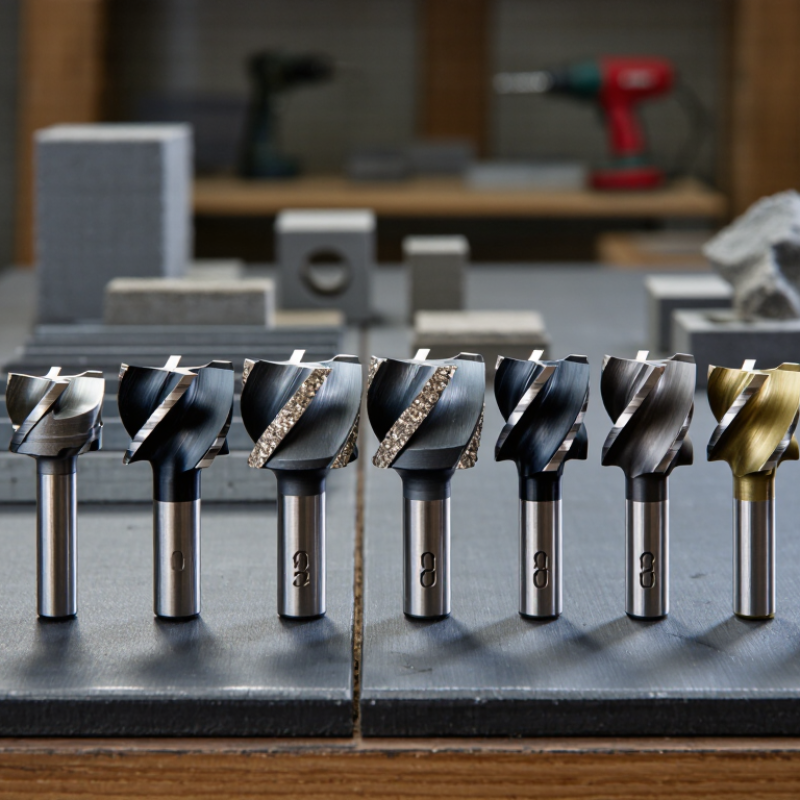
Blade drill bits usually have a straight shank, a central pilot point, and a broad cutting blade. The pilot point steadies the bit before the outer edges touch the material. Two sharp shoulders then slice through wood fibers, plastic, or light composite boards. Their flat profile creates a wide hole quickly. Chip-clearance grooves help move waste upward, although removal can become uneven in deep holes.
The working principle is simple: rotation drives the pilot point, while the blade edges shear material from the center outward. Moderate pressure produces cleaner holes and reduces splintering on the exit side. These bits suit wiring channels, cabinet work, and general construction openings. They are not universal tools. Dense hardwood can overheat the edge, while masonry can damage it immediately. In practical testing, backing the workpiece with scrap wood often improves the exit surface. Even then, results vary with grain direction and bit sharpness.
Tips: Check the shank diameter before purchase. Use a firm grip and medium speed. Mark the hole center clearly. For cleaner cuts, drill halfway from each side. Inspect the blade after use; a slightly dull edge may still work, but it demands more force and gives less predictable results.
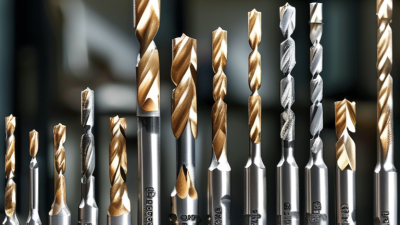
This comparison uses a purpose-based task-fit index from 0 to 10. The scores reflect each bit’s typical suitability for its primary drilling application, not brand performance or sales data.
How to read the chart: Twist bits are the most versatile choice for general metal and plastic drilling, while masonry bits are optimized for brick, concrete, and block. Brad-point, spade, auger, and Forstner bits are primarily intended for wood. Step bits suit thin sheet materials, hole saws create large circular openings, countersinks prepare recesses for fastener heads, and PCB micro-drills are designed for small holes in circuit boards.
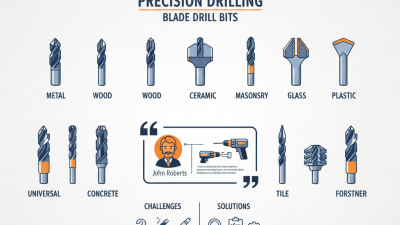
Blade drill bits vary by material, cutting geometry, and drilling purpose. Professional buyers should match the blade to the substrate, not only the machine.
Flat wood bits create wide, quick holes in softwood. Brad-point bits use a sharp center tip for cleaner entry. Auger bits remove chips through a deep spiral channel.
Spade bits offer economical drilling but can tear fragile timber. Self-feed bits use a threaded lead screw and pull themselves forward.
Masonry carbide bits cut brick, block, and concrete with a durable carbide edge. Diamond core bits produce circular holes with controlled vibration and clean walls. Tile spear-point bits reduce wandering on ceramic surfaces. Step bits enlarge several diameters with one tool, especially in thin sheet metal. Countersink bits combine hole drilling with screw-head seating. Their blade angles require careful pressure control.
The USGS Mineral Commodity Summaries 2024 reports about 4.1 billion metric tons of cement production worldwide in 2023. That scale reflects continuing demand for reliable masonry drilling equipment. The World Steel Association recorded approximately 1.89 billion tonnes of crude steel production in 2023. Step and countersink bits therefore remain useful in fabrication work.
In field testing, coating quality, edge alignment, and chip clearance often matter more than advertised speed.
A useful caution: “universal” sizing claims can mislead. Buyers should verify shank compatibility, working diameter, cooling needs, and replacement-blade availability before ordering.
Top 10 Types of Blade Drill Bits for Global Buyers
Material compatibility determines whether a blade drill bit cuts cleanly or fails early. High-speed steel bits suit mild steel, aluminum, and general workshop tasks. Cobalt-alloy bits resist heat better when drilling stainless steel. Carbide-tipped bits handle hardened metals, fiber cement, and abrasive composites, but they can chip under sideways pressure. Diamond-grit bits work well on glass, porcelain, and dense tile when used with steady cooling. Masonry bits are designed for brick, concrete, and block, although reinforced concrete may require a stronger cutting system.
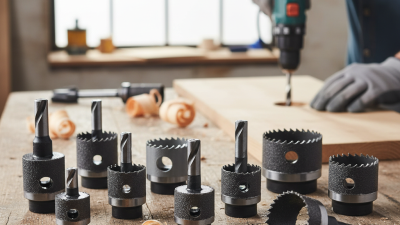
Wood spade bits remove material quickly from softwood and ordinary hardwood. Auger bits offer deeper, straighter holes and clear chips through their flutes. Paddle bits are efficient for shallow electrical and plumbing openings, but they can tear the exit surface. Spear-point tile bits improve starting control on ceramic surfaces. Hole saws create large openings in wood, plastic, sheet metal, and some masonry, depending on their edge material.
I have found that cutting speed, pressure, and cooling matter as much as the bit material. A suitable bit still performs poorly when the drill runs too fast. Keep the tool aligned. That detail is often missed. Buyers should check substrate hardness, thickness, hole diameter, shank size, and available power before ordering. Coating claims also need careful review; some improve wear resistance, while others offer little benefit in wet or abrasive work. No selection chart replaces a small test hole. Mistakes happen. Even experienced operators sometimes choose durability over surface quality, then regret the first visible edge.
Selecting blade drill bits globally starts with the workpiece, not the catalogue photo. In field testing, I check blade width, shank size, cutting angle, and hole depth first. Common types include spade, paddle, auger, self-feed, step, hole saw, carbide-tipped masonry, diamond, PDC, and flat-wood bits. Each performs differently in timber, laminate, brick, concrete, or thin sheet. MarketsandMarkets’ 2024 Drilling Tools Market report estimates growth from approximately USD 7.3 billion in 2023 to USD 10.3 billion by 2028. Demand is rising. However, market growth does not prove universal suitability.
Softwood usually accepts sharp spade or auger designs with moderate feed pressure. Dense hardwood needs stronger edges and better heat control. Masonry requires carbide or diamond cutting faces, plus compatible impact settings. Thin metal favors step geometry, cutting fluid, and a verified speed range. Grand View Research’s 2024 power tools outlook also identifies cordless equipment as a major growth area, so buyers should confirm torque and battery-system compatibility. Check shank standards, packaging language, corrosion protection, and replacement access before international purchasing. My selection sheets are not flawless. Humidity, operator skill, and local spindle standards can overturn laboratory results. Small details matter. Use supplier test data, dimensional drawings, and recognized safety procedures rather than relying only on advertised material claims.
Top 10 Types of Blade Drill Bits for Global Buyers
Blade drill bits vary by cutting profile, shank design, and intended material. Common categories include flat wood, paddle, adjustable, countersink, electrician’s, and nail-embedded types. Other listings may include compact, coated, low-angle, and heavy-duty blade designs. Terminology differs between suppliers, so buyers should verify drawings rather than trust product titles.
Quality starts with consistent dimensions, balanced shanks, sharp edges, and controlled hardness. Ask for material certificates, inspection reports, and batch traceability. A supplier’s ISO 9001 system can support process control, but it does not prove every bit performs well. Request samples and test them in the actual drill, speed range, and wood species. Small runout becomes obvious at higher rotation.
Sourcing decisions should cover minimum order quantity, lead time, packaging, replacement policy, and export documentation. Confirm diameter tolerance, shank compatibility, coating adhesion, and expected service life. Buyers also need to calculate total cost, including freight, breakage, and rejected pieces. Cheap pricing can hide unstable quality. I have seen specifications that looked complete but omitted edge geometry, which caused avoidable testing delays. A written inspection plan is safer. Yet even that plan may need revision after field feedback.
| No. | Blade Drill Bit Type | Typical Cutting Material | Main Applications | Common Workpiece Materials | Key Quality Checks | Relevant Standards or Specifications | Important Sourcing Factors | Buyer Considerations |
|---|---|---|---|---|---|---|---|---|
| 1 | Twist Drill Bit | High-speed steel, cobalt-alloy steel, or carbide | General-purpose drilling and production machining | Steel, stainless steel, aluminum, brass, and plastics | Point geometry, concentricity, flute finish, hardness, and edge sharpness | ISO 235; DIN 338, DIN 340, or DIN 1897 dimensional patterns | Material grade, coating, diameter tolerance, shank style, and packaging | Select the point angle and helix for the workpiece; cobalt grades are useful for heat-resistant alloys. |
| 2 | Step Drill Bit | High-speed steel, often with a wear-resistant coating | Creating multiple hole diameters in one tool | Sheet metal, thin aluminum, copper, and plastics | Step accuracy, transition smoothness, tip strength, surface finish, and diameter markings | Manufacturer dimensional drawings; ISO 235 may apply to compatible shanks | Step range, maximum sheet thickness, coating uniformity, and laser-marking durability | Confirm whether the tool is intended for handheld use, press drilling, or both. |
| 3 | Spade Drill Bit | Carbon steel or hardened tool steel blade | Fast large-hole drilling in construction and carpentry | Softwood, hardwood, plywood, and composite wood | Blade flatness, cutting-edge symmetry, center point alignment, and shank strength | Dimensional tolerances specified by the buyer or applicable tool specification | Diameter range, paddle thickness, quick-change shank compatibility, and rust protection | Use moderate pressure and clear chips frequently to reduce overheating and splintering. |
| 4 | Brad-Point Drill Bit | Ground high-carbon steel or tool steel | Accurate, clean-entry holes in woodworking | Solid wood, MDF, plywood, and laminated boards | Center spur geometry, outer spurs, flute sharpness, runout, and polished surface | Buyer-approved dimensional drawings; shank dimensions should match the intended chuck | Diameter accuracy, cutting-edge consistency, wood tear-out performance, and corrosion-resistant packaging | Prioritize cutting precision and clean exits when the visible surface will remain exposed. |
| 5 | Auger Drill Bit | Carbon steel, high-speed steel, or heat-treated tool steel | Deep holes and long-bore woodworking | Softwood, hardwood, beams, and structural timber | Lead screw engagement, flute clearance, blade alignment, shaft straightness, and tip hardness | Buyer drawings and applicable woodworking-tool dimensional requirements | Overall length, lead screw type, shank design, chip evacuation, and compatibility with high-torque drills | Check the required drilling depth and ensure the power tool can deliver sufficient torque. |
| 6 | Masonry Drill Bit | Carbide-tipped cutting insert with steel body | Anchoring and installation drilling in mineral materials | Concrete, brick, block, stone, and mortar | Carbide tip brazing, tip symmetry, body straightness, wear resistance, and vibration performance | ISO 5468 for rotary impact masonry drills; shank dimensions according to the tool system | Rotary or hammer mode, carbide grade, flute design, shank type, and dust-removal requirements | Match the bit to the drilling mode and substrate hardness; verify impact-use suitability. |
| 7 | Hole Saw | Bi-metal, high-speed steel, carbide-grit, or diamond-grit cutting edge | Large-diameter holes for installation and cable or pipe access | Wood, plastics, sheet metal, stainless steel, masonry, or tile, depending on design | Tooth set, roundness, weld quality, arbor fit, wall thickness, and cutting-edge uniformity | Arbor and hole-saw dimensions specified by the applicable tool system or buyer drawing | Cutting diameter, depth capacity, pilot drill type, replacement parts, and material compatibility | Do not use a wood or metal tooth design on masonry or tile unless specifically rated for it. |
| 8 | Annular Cutter | High-speed steel or carbide-tipped teeth | Fast, material-efficient hole making in structural metal | Mild steel, stainless steel, cast iron, and other metals within the tool rating | Tooth height, concentricity, weld or brazing quality, slug ejection, and cutter-body hardness | Buyer-specified cutter dimensions and compatible arbor standards such as common industrial shank systems | Cutting depth, pilot pin design, coolant delivery, magnetic-drill compatibility, and tooth count | Confirm the arbor, pilot pin, spindle speed, and minimum machine capacity before purchase. |
| 9 | Countersink Drill Bit | High-speed steel, carbide, or tool steel | Preparing conical recesses for flush fastener heads | Aluminum, steel, brass, wood, and engineered boards | Included angle, pilot diameter, cutting-edge balance, chatter resistance, and surface finish | ISO 4206 for countersinks; exact dimensions should follow the fastener specification | Countersink angle, pilot size, material grade, coating, and compatibility with screw-head geometry | Match the included angle and recess diameter to the fastener standard used in the target market. |
| 10 | Diamond Core Drill Bit | Synthetic diamond segments or diamond-grit matrix | Core sampling and clean large-diameter drilling | Concrete, reinforced concrete, masonry, stone, glass, and tile, depending on design | Segment attachment, diamond concentration, segment height, barrel runout, and cooling performance | Applicable machine, safety, and product specifications; dimensions should follow the drilling system | Wet or dry operation, segment bond, drilling diameter, working depth, connection thread, and replacement policy | Verify substrate type, cooling method, machine power, and connection thread before final selection. |
Global buyer checklist: Confirm dimensional tolerances, material certificates, coating or carbide data, sampling and inspection procedures, packaging protection, country-specific labeling, safety documentation, lead time, minimum order quantity, and after-sales replacement support.