Leave Your Message
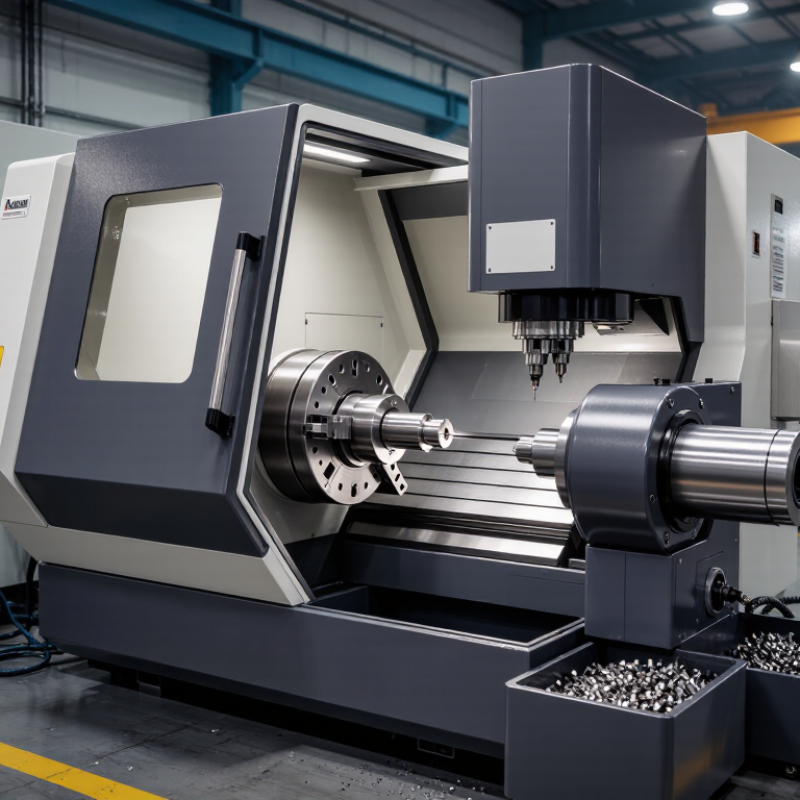
Choosing the right Industrial Machine Tool begins with the workpiece, not the machine’s glossy brochure. Material, dimensions, tolerances, and production volume shape every sensible decision. A compact CNC lathe may suit small steel components. It may struggle with long shafts or demanding surface finishes. The wrong choice becomes visible in vibration, scrap, and delayed orders.
This guide examines practical criteria used by experienced machining teams. Spindle power, rigidity, axis travel, repeatability, control systems, and tooling support deserve close attention. A machine should match both today’s jobs and realistic future requirements. Consider the workshop itself. Measure floor space, electrical capacity, coolant handling, chip removal, and access for maintenance. These details are easy to ignore. They should not be.
Reliable selection also requires evidence beyond sales claims. Request test cuts using comparable material and inspect the finished part. Review documented accuracy, service response times, operator training, warranty terms, and parts availability. Speak with users who run similar equipment under daily production pressure. Their experience can reveal noise, setup delays, or software frustrations that specifications rarely mention. Total cost includes installation, tooling, energy, maintenance, and downtime. No choice is perfect. Even careful buyers can underestimate operator skill or future workload. A thoughtful decision accepts that uncertainty and manages it with testing, expert advice, and measurable requirements.
How to Choose the Right Industrial Machine Tool?
Defining production needs should come before comparing machine specifications. Start with the parts, materials, annual volume, tolerances, and surface-finish targets. Record actual cycle times, not optimistic estimates. Capacity is not output. A machine rated for 20 hours daily may lose time during setup, inspection, tool changes, and maintenance. The required objective might be flexibility, repeatability, unattended production, or lower energy use. These goals demand different configurations. For example, a high-mix workshop may value rapid changeovers more than maximum spindle power.
The Deloitte 2024 Smart Manufacturing and Operations Survey found that 86% of manufacturers view smart manufacturing as important for competitiveness within three years. That finding supports planning for data collection, condition monitoring, and compatible automation interfaces. The International Federation of Robotics reported 541,302 industrial robots installed worldwide in 2023, a 10% increase from 2022. However, automation should follow a stable process. Automating an inconsistent operation can multiply defects. The fixture matters. Define measurement points, operator access, coolant needs, chip control, and floor-space limits before requesting quotations. A lower purchase price may hide higher tooling, training, energy, and downtime costs. My first production forecast would still be provisional. Pilot runs and supplier trials can expose weak assumptions, especially when cutting difficult alloys or holding tight tolerances. Ask for verified test results, service-response details, and five-year operating estimates.
| Production Requirement | Typical Operating Condition | Recommended Machine Type | Key Machine Objectives | Target Specifications | Best-Fit Production Scenario |
|---|---|---|---|---|---|
| Prototype and repair work | 1–20 parts per month; frequent design changes; multiple materials | 3-axis vertical machining center or engine lathe | Flexibility, fast setup, easy programming, broad workpiece compatibility | Working envelope of 500–800 mm; positioning accuracy around ±0.01 mm; spindle speed of 6,000–12,000 rpm | Maintenance departments, tool rooms, product development, and custom components |
| Low-volume precision production | 20–200 parts per month; tight dimensional requirements; several part variants | CNC vertical machining center or CNC turning center | Repeatability, stable thermal performance, reduced setup time | Repeatability within ±0.005–0.01 mm; automatic tool changer with 16–30 tools; coolant filtration | Aerospace subassemblies, medical components, precision fixtures, and industrial equipment |
| Medium-volume batch production | 200–2,000 parts per month; recurring orders; moderate product variation | CNC machining center with pallet changer or CNC turning cell | High utilization, shorter cycle time, consistent unattended operation | Spindle speed of 8,000–15,000 rpm; rapid traverse of 24–40 m/min; pallet change under 15 seconds | Automotive components, hydraulic parts, general machinery, and repeat-order production |
| High-volume standardized production | More than 2,000 parts per month; stable designs; continuous demand | Dedicated CNC cell, multi-spindle machine, or transfer-line equipment | Maximum throughput, minimal labor content, predictable cycle time | Cycle time below 2–5 minutes per part; automatic loading and unloading; availability above 85% | High-demand components with limited design changes and stable process routing |
| Large and heavy workpieces | Workpieces above 1,000 kg or longer than 1,500 mm; heavy material removal | Large vertical lathe, floor-type boring mill, or heavy-duty machining center | Rigidity, load capacity, vibration control, and safe workholding | Table load above 2,000 kg; spindle torque above 500 Nm; reinforced ways and foundation requirements | Energy equipment, construction machinery, molds, large shafts, and structural components |
| Complex multi-face machining | Parts require machining on three or more faces; frequent re-fixturing is undesirable | 4-axis or 5-axis machining center | Fewer setups, improved geometric accuracy, access to complex features | Rotary-axis positioning accuracy around ±5–10 arc-seconds; 20–40 tool positions; high-speed look-ahead control | Impellers, medical implants, aerospace structures, molds, and complex housings |
| Hard materials and difficult alloys | Titanium, hardened steel above 45 HRC, nickel alloys, or heat-resistant materials | High-rigidity machining center, hard-turning lathe, or electrical discharge machine | Thermal stability, cutting-force control, tool-life management, and surface integrity | Spindle power of 15–30 kW; through-spindle coolant; rigid tooling interface; thermal compensation | Aerospace, power generation, mold manufacturing, and wear-resistant component production |
| Unattended or lights-out operation | Multiple shifts; limited operator availability; stable and repeatable process | Automated CNC cell with bar feeder, robot, pallet system, or in-process monitoring | Labor reduction, process security, automatic recovery, and real-time status visibility | Workholding pressure monitoring; tool-break detection; chip management; buffer capacity for 4–12 hours | Stable batch production with predictable raw material and tooling requirements |
| Short lead times and frequent changeovers | Several product families; setup changes daily or weekly; urgent orders | Flexible CNC machine with quick-change tooling and standardized fixtures | Fast setup, reduced work-in-process inventory, and rapid response to demand changes | Tool presetting; zero-point workholding; setup time target below 30 minutes; offline program transfer | Job shops, contract manufacturers, spare parts, and mixed-model production |