How to Choose the Best Cast Iron Drill Bits for Your Projects?
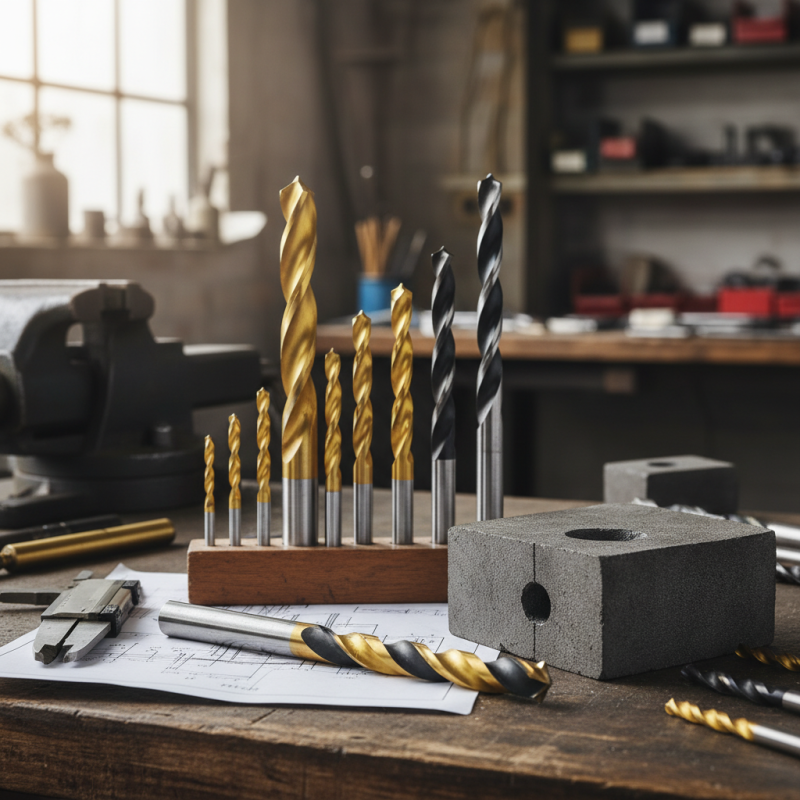
Choosing the best cast iron drill bits can greatly affect your project’s success. John Smith, an expert in metalworking, once said, "The right tools make all the difference." When working with tough materials like cast iron, selecting high-quality drill bits is essential.
Cast iron is known for its durability and strength. However, it presents challenges when drilling. The wrong drill bit can lead to frustration and wasted time. An incorrect choice may also damage your workpiece. Research is crucial in making the right decision.
Look for drill bits that offer strength and precision. High-speed steel and carbide-tipped options are often recommended. Factors like coating and tip design can enhance performance. Keep in mind that even experts face difficulties. Even the best tools require careful handling and technique. As you explore your options, prioritize quality to ensure the best results.
Factors to Consider When Choosing Cast Iron Drill Bits
Choosing the right cast iron drill bits can greatly impact the success of your projects. Start by considering the material type. Cast iron comes in various grades. Each grade has its hardness and brittleness. Softer grades may require specific bits that prevent breakage during drilling.
Another essential factor is the bit's coating. A high-quality coating can improve performance. It also enhances longevity. Look for drill bits with advanced coatings, which can reduce friction and heat buildup. This is vital when drilling dense materials like cast iron.
Lastly, consider the size and type of the bit. Drill bits come in various sizes, and choosing the wrong size can result in poor results. The type is equally important; some bits are designed specifically for metal, while others suit general use. Reflect on previous experiences. A bit that worked well last time may not be ideal for every project. Take the time to evaluate your specific needs before making a decision.
How to Choose the Best Cast Iron Drill Bits for Your Projects? - Factors to Consider When Choosing Cast Iron Drill Bits
| Factor |
Description |
Importance Level |
| Material |
Consider high-carbon steel or carbide-coated bits for durability and performance. |
High |
| Shank Type |
Ensure compatibility with your drill; options include round or hex shank. |
Medium |
| Bit Size |
Select the appropriate size for your project, ranging from small pilot bits to larger sizes for heavy-duty work. |
High |
| Coating |
Look for coatings like titanium or black oxide for reduced friction and increased lifespan. |
Medium |
| Cutting Angle |
Higher angles may provide smoother cuts; consider 118° for general-purpose drilling. |
Low |
| Brand Reputation |
Research user reviews and brand history for reliability and performance. |
Medium |
Material Composition and Its Impact on Durability and Performance
When selecting cast iron drill bits, the material composition plays a crucial role in their durability and performance. High-carbon steel, for example, offers increased hardness and wear resistance, enabling it to withstand the rigors of drilling into tough materials. In a study by the American National Standards Institute, drill bits made from high-carbon steel showed a 25% longer lifespan compared to traditional steel counterparts. This advantage becomes even more significant in professional applications where longevity is paramount.
Furthermore, the presence of cobalt in drill bit materials enhances heat resistance. According to research from the Metalworking Industry Foundation, cobalt-infused drill bits can maintain structural integrity at higher temperatures. This attribute reduces the risk of bit failure during prolonged use and intense drilling sessions. However, despite these advantages, users should remain cautious; not all cobalt blends deliver the same results. Variability in manufacturing processes can lead to inconsistencies in performance—it's essential to choose suppliers with proven quality metrics.
Lastly, different coatings like titanium can improve surface hardness. Yet, these coatings may wear off, diminishing their effectiveness over time. In a practical scenario, an improperly stored bit may corrode, negating the benefits of advanced materials. Regular maintenance and an understanding of wear patterns are vital. Not every project necessitates the most advanced bit; sometimes, standard options may suffice. Knowing when to invest in premium materials can save time and money in the long run.
Diameter and Length: How Size Affects Precision and Efficiency
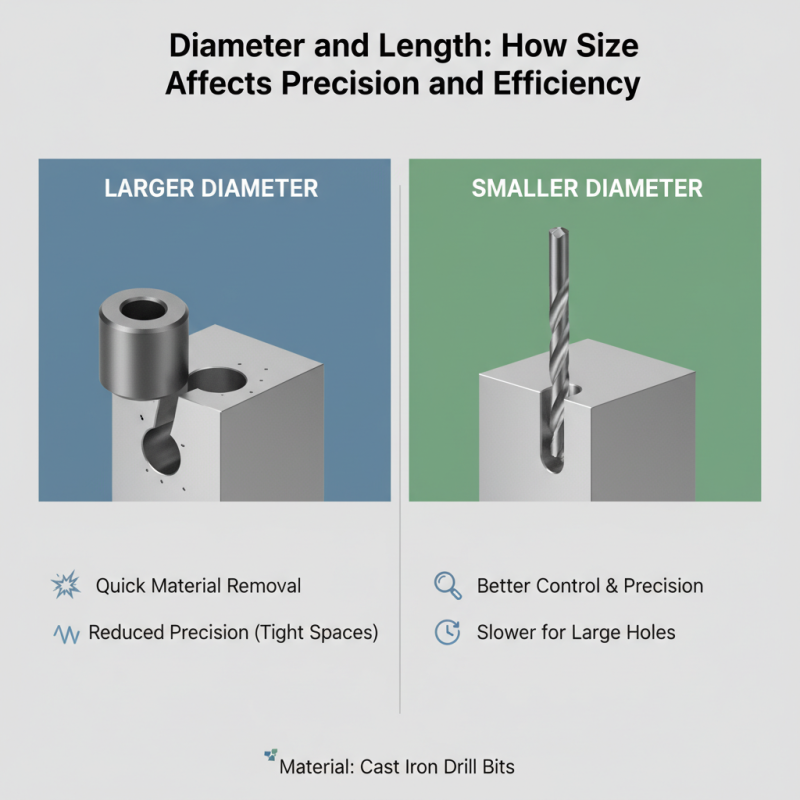
When choosing cast iron drill bits, diameter and length are crucial factors. The diameter determines the size of the hole. A larger diameter can remove more material quickly. However, it may reduce precision, especially in tight spaces. Smaller bits offer better control but can cause frustration if you need to drill larger holes.
Length impacts the depth of the hole. Longer bits reach deeper areas but may flex or wobble. This can compromise drill accuracy. Shorter bits provide stability but might not penetrate as deep as required. You may need multiple bits for different tasks, leading to potential oversights in planning.
Choosing the correct size is not always straightforward. It requires consideration of your specific project needs. Experimenting with different sizes can yield unexpected results, both good and bad. Careful evaluation of your requirements can help minimize trial and error. Over time, you will find what works best for your projects.
Coating Options: Comparing Titanium, Black Oxide, and Other Finishes
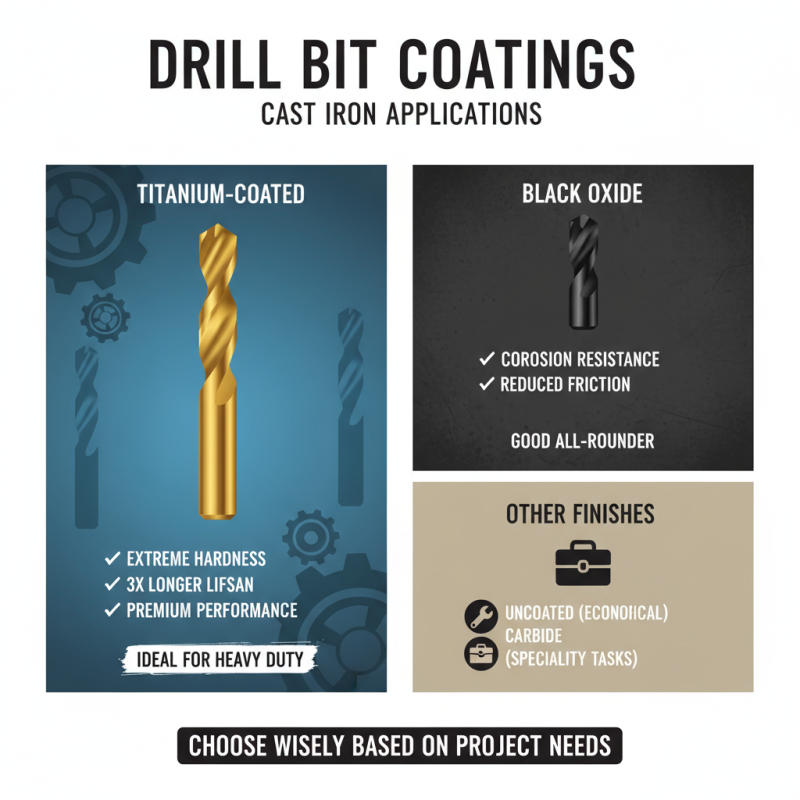
When choosing cast iron drill bits, the coating options significantly impact performance and durability. Titanium-coating is popular due to its hardness. It maintains sharpness and provides a longer lifespan. Reports indicate that titanium-coated bits can last up to 3 times longer than uncoated variants. However, they can be more expensive and are not always necessary for light projects.
Black oxide is another common finish. It offers corrosion resistance and enhances the bit’s lifespan as well. While not as durable as titanium, black oxide can be a cost-effective choice for many users. A study by the American National Standards Institute highlighted that bits with this coating had a 20% longer life compared to standard steel bits.
Another option is nitride, which offers an excellent balance of hardness and toughness. Nitride coatings can reduce friction, leading to smoother drilling. However, the initial investment might not yield immediate results for casual users. Understanding the specific needs of your project is crucial. The ideal coating not only improves efficiency but also affects overall costs. In some cases, experimenting with different coatings may be necessary to find the best fit for your tasks.
Industry Standards: Understanding ANSI and ISO Guidelines for Drill Bits
When selecting cast iron drill bits, it's crucial to understand the
industry standards. ANSI and ISO guidelines provide a framework for
quality and performance. These standards define dimensions,
tolerances, and testing methods for drill bits. Knowing these specifications helps ensure reliability
and consistency in your projects.
ANSI focuses on safety and operational efficiency. It specifies the materials and design elements
necessary for effective drilling. ISO standards, on the other hand, emphasize international
uniformity. They enable seamless interoperability across borders. Adhering to these guidelines
minimizes the risk of using subpar tools.
Evaluating drill bits based on these standards can be overwhelming. Many users overlook the
importance of compatibility. Not all bits will fit every drill. Testing different options may lead
to frustration. Understanding the nuances of each standard can enhance your decision-making.
With diligence, you can find tools that align with both your needs
and industry expectations.