Leave Your Message
China has become a major sourcing base for Hole Saw Tool products, serving hardware distributors, contractors, and industrial buyers worldwide. The market includes factories producing bi-metal hole saws, carbide-grit models, diamond-coated tools, arbor systems, and complete drilling kits. However, product quality can differ sharply between suppliers, even when catalogs look similar.
This guide, “China Top 10 Hole Saw Tool Suppliers for Global Buyers,” introduces manufacturers with practical purchasing criteria. These criteria include production experience, material selection, tooth geometry, heat treatment, packaging quality, and export support. Supplier credibility also matters. Buyers should review factory records, testing reports, customer feedback, and relevant quality systems before placing large orders. A polished website is not enough.
Real sourcing decisions often begin with small details. Does the saw cut cleanly through stainless steel? Does the arbor stay stable after repeated use? Can the supplier maintain tooth consistency across 500 or 5,000 pieces? Sample testing can reveal more than a sales presentation. It is also wise to compare minimum order quantities, lead times, private-label options, warranty responses, and replacement policies.
The listed companies should not be treated as permanently ranked. Markets change. Information becomes outdated. Buyers must verify current certifications, production capacity, pricing, and compliance requirements directly with each supplier. This introduction aims to provide a reliable starting point, not a substitute for technical inspection. Some evaluations may remain imperfect, especially when public data is limited. Careful checking remains essential.

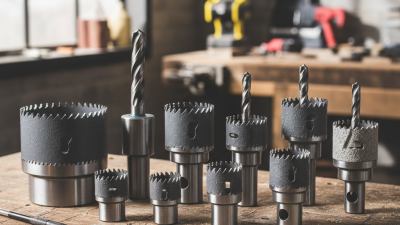
A hole saw is a cylindrical cutting tool used to create clean, round openings in wood, metal, plastic, and composite panels. It usually combines a toothed cup, arbor, and pilot drill. The pilot keeps the cut centered, while the teeth remove a ring of material. Tooth geometry and material matter greatly. Bi-metal teeth suit general metalwork, while carbide-tipped versions handle harder surfaces and longer production cycles.
Demand is linked to construction, maintenance, and electrical installation. Fortune Business Insights estimated the global power tools market at USD 41.95 billion in 2023, with continued growth forecast through 2032. Hole saws remain a small accessory category, but they benefit from this wider equipment demand. UN Comtrade trade data for HS 8202 also shows China as a major exporter of saw blades and related cutting products. China offers dense manufacturing networks, flexible tooling, and practical customization. Buyers can request metric or imperial sizes, different tooth pitches, pilot drills, and private packaging. Not every low quote is efficient. Experienced sourcing teams should check runout, tooth hardness, arbor fit, sample cutting results, and batch consistency. Validation matters more. A useful inspection includes cutting a defined material thickness and recording time, heat, vibration, and edge quality. Some suppliers provide impressive samples but inconsistent production batches. That risk is easy to underestimate. Requesting inspection records and independent pre-shipment checks improves reliability, especially for global buyers managing varied workplace standards.
Supplier-neutral reference table covering the main hole saw configurations, cutting materials, applications, and specifications global buyers should evaluate when sourcing from China.
| No. | Hole Saw Configuration | Cutting Material | Typical Applications | Arbor and Pilot Requirements | Common Diameter Range | Key Specification to Verify |
|---|---|---|---|---|---|---|
| 1 | Bi-metal hole saw | High-speed steel cutting edge with an alloy-steel body | Mild steel, stainless steel, aluminum, wood, plastics, and general maintenance work | Compatible arbor with pilot drill; arbor capacity must match the saw diameter | Approximately 14–210 mm | Tooth pitch, cutting-edge hardness, weld quality, kerf design, and rated cutting materials |
| 2 | Carbide-tipped hole saw | Carbide teeth brazed or fixed to a steel body | Stainless steel, cast iron, cement board, tile, abrasive plastics, and difficult sheet materials | Heavy-duty arbor and pilot drill recommended for rigid, low-vibration operation | Approximately 16–150 mm | Carbide grade, tooth attachment, tooth geometry, runout, and recommended operating speed |
| 3 | Diamond-grit hole saw | Diamond abrasive bonded to a metal or coated cutting rim | Ceramic tile, porcelain tile, glass, marble, granite, and other brittle materials | Usually used with a compatible arbor; pilot guidance and water cooling may be required | Approximately 5–160 mm | Diamond concentration, bonding method, rim continuity, wall thickness, and wet or dry cutting rating |
| 4 | Grit-edge hole saw | Silicon-carbide or tungsten-carbide abrasive grit | Brick, concrete block, soft masonry, plasterboard, and abrasive building materials | Arbor selection depends on diameter and the power tool’s chuck or spindle interface | Approximately 32–152 mm | Grit size, coating uniformity, body rigidity, dust clearance, and maximum drilling depth |
| 5 | Adjustable hole cutter | High-speed steel or carbide cutting blades | Variable-size holes in wood, drywall, soft plastics, and selected thin sheet materials | Integrated or replaceable arbor; blade locking strength is essential for safe operation | Commonly adjustable from about 25–125 mm | Adjustment mechanism, blade retention, maximum speed, cutting depth, and guard design |
| 6 | Deep-cut hole saw | Bi-metal or carbide-tipped construction | Thick timber, laminated panels, pipe installation, electrical boxes, and multi-layer materials | Longer pilot drill and a rigid arbor are required to reduce wandering during deep cuts | Approximately 20–152 mm, with depths commonly above standard models | Usable cutting depth, side-slot design, chip evacuation, body concentricity, and arbor stability |
| 7 | Thin-wall hole saw | High-speed steel, bi-metal, or diamond-coated steel | Thin metal panels, electrical enclosures, plastic sheets, laminate, and light-gauge materials | Precision arbor recommended; excessive pilot pressure can deform thin workpieces | Approximately 16–100 mm | Wall thickness, edge sharpness, concentricity, burr control, and material-specific speed guidance |
| 8 | Multi-purpose hole saw set | Usually bi-metal, with selected carbide or abrasive accessories | General construction, plumbing, electrical installation, woodworking, and repair tasks | Set should include compatible arbors, pilot drills, adapters, and replacement components | Common sets cover approximately 19–127 mm | Diameter selection, component compatibility, case quality, replacement availability, and labeling accuracy |
| 9 | Fast-cut wood hole saw | Carbon steel, hardened steel, or bi-metal with wood-optimized teeth | Softwood, hardwood, plywood, MDF, particleboard, and roof or flooring installation | Standard arbor with a sharp pilot drill; a larger shank may be needed for large diameters | Approximately 19–152 mm | Tooth form, gullets, chip clearance, cutting depth, heat treatment, and resharpening potential |
| 10 | Metal-cutting hole saw | Bi-metal or carbide-tipped construction | Carbon steel, stainless steel, aluminum, copper, conduit, tubing, and sheet metal | Rigid arbor with a suitable pilot drill; cutting fluid is often recommended for metal | Approximately 14–210 mm | Tooth pitch, heat resistance, maximum RPM, cutting-fluid guidance, and stated material thickness |