Top 10 Hole Saw Tools for Efficient Cutting Solutions?
In the construction and woodworking industries, the efficient use of cutting tools is paramount. Hole Saw Tools are essential for creating perfect, clean holes in various materials. According to a report from Market Research Future, the global hole saw market is projected to grow at a CAGR of 5.6% over the next five years. This growth highlights the increasing demand for precision cutting solutions among professionals and DIY enthusiasts alike.
Choosing the right Hole Saw Tool can significantly impact project efficiency. Professionals often face challenges related to tool durability and performance in diverse materials. A study from the American National Standards Institute emphasizes that quality tools can reduce fatigue and improve accuracy. However, not all hole saws are created equal. Some may not perform as advertised, leading to wasted time and materials.
When considering tool options, it is crucial to assess the specific needs of the job. Not every Hole Saw Tool will deliver the desired results in every situation. Reflecting on past experiences can lead to better choices. Ultimately, selecting the right tool is key to achieving efficient cutting and overall project success.
Top 10 Hole Saw Tools for Efficient Cutting Solutions
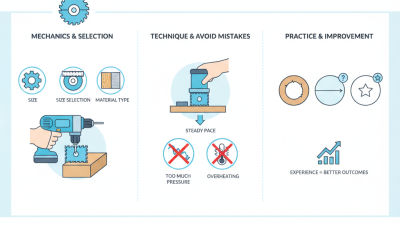
When it comes to efficient cutting solutions, selecting the right hole saw tools is essential. These tools are indispensable for tasks that require precise and clean holes. Proper choices can lead to smoother projects and better outcomes. Pay attention to the material type you're cutting. Wood, plastic, and metal require different saw types. Having the right tool can make a big difference in your results.
Tips: Always check the quality of the blade. Dull or weak tools can lead to frustration and wasted materials. Safety should never be overlooked. Wear protective gear to avoid injuries. Additionally, consider the drill's power. A less powerful drill may struggle with tougher materials. Testing the tool on scrap materials can help prevent mishaps.
Choosing a hole saw often comes down to personal preference. Reflect on your needs and the frequency of use. An expensive tool isn’t always the best choice. Sometimes, a simpler design can offer reliability. Reviews and recommendations can guide you, but remember your unique requirements. Take time to explore options before making a purchase.
Top 10 Hole Saw Tools for Efficient Cutting Solutions
| Rank |
Size (inches) |
Material |
Application |
Cutting Depth (inches) |
Average Price ($) |
| 1 |
1-1/4 |
Bi-metal |
Wood, Plastic |
1-3/4 |
25 |
| 2 |
2 |
High-Speed Steel |
Wood, Soft Metals |
2 |
30 |
| 3 |
3 |
Carbide Tipped |
Hardwood, Composites |
2-1/2 |
40 |
| 4 |
4 |
Bi-metal |
Wood, PVC |
2 |
50 |
| 5 |
5 |
Carbide |
Tile, Glass |
1-1/2 |
70 |
| 6 |
6 |
Bi-metal |
Sheet Metal |
2 |
80 |
| 7 |
7 |
Carbide |
Masonry, Brick |
3 |
90 |
| 8 |
8 |
Bi-metal |
Wood, Plastic |
2-1/4 |
100 |
| 9 |
9 |
Carbide |
Sheet Metal |
2-1/2 |
110 |
| 10 |
10 |
Bi-metal |
Wood, Drywall |
3 |
120 |
Understanding Hole Saw Types: Bi-Metal, Carbide Tipped, and More
When it comes to hole saw tools, understanding the different types is crucial for effective cutting. Bi-metal hole saws are a popular choice. They consist of high-speed steel teeth on a tough steel body. This design allows them to cut through various materials. They are particularly effective on wood, metal, and plastic. If you need versatility in your toolbox, bi-metal options often perform well.
Carbide-tipped hole saws serve another purpose. They feature carbide tips that enhance durability. These are best for tougher materials like tile or masonry. However, users often overlook their specific applications. They aren't ideal for softwoods or plastics. This can lead to frustrations. Those may assume they work on all surfaces, which isn't true. Understanding these nuances is essential for anyone looking to invest wisely in hole saw tools.
Lastly, there are specialty hole saws. These are designed for specific tasks. For instance, some are made for large diameter holes, while others are meant for intricate work. Yet, not all users appreciate the importance of selecting the right saw type. This can lead to challenges during projects. Awareness of different types leads to efficient and successful outcomes in your cutting tasks.
Key Factors in Selecting Hole Saw Tools: Material, Size, and Coatings
When selecting hole saw tools, several key factors come into play. Material choice significantly impacts performance. For instance, bi-metal hole saws combine high-speed steel with a tough backing, offering durability and precision. According to recent industry reports, bi-metal options can last up to 60% longer than carbon steel alternatives in demanding applications. This durability can save users both time and money on frequent replacements.
Size is equally crucial. Hole saws come in various diameters, from small for wiring to large for plumbing fixtures. A well-known study highlighted that using the wrong size saw could lead to inefficient cutting, wasting about 20% of the material. This inefficiency reflects directly on project costs. Selecting the correct size ensures clean cuts and minimizes waste, leading to better overall efficiency in projects.
Coatings enhance tool performance, especially in high-friction applications. Titanium or carbide coatings reduce friction and heat generation. Reports indicate that tools with proper coatings can enhance cutting efficiency by 30%. However, not all coatings are equal, and users must consider the specific application needs. Understanding these factors can lead to smarter buying choices, but many users still overlook them, impacting their cutting performance.
Industry Data on Performance: Cutting Speed and Durability Comparisons
When selecting hole saw tools, cutting speed and durability are critical metrics. Industry data reveals that thicker, high-carbon steel in hole saws offers enhanced longevity. However, not every tool can perform efficiently in diverse materials. Performance varies widely. You may face challenges in softer materials where faster speeds are needed.
Tips: Always check the material your hole saw is designed for. Some tools excel at wood but struggle with metal or ceramics. A tool that overheats quickly can lead to poor results.
In cutting performance tests, temperature control was crucial. Many tools lost efficiency due to excessive heat buildup. Durability can be misleading; a tough exterior doesn't guarantee cutting power. A breakdown during use can waste time and resources.
Tips: Pay attention to tooth design. A finer tooth can enhance precision but slows cutting speed. Sometimes you must choose the right balance. Having a variety of hole saw tools for different tasks can eliminate frustration during projects.
Safety Considerations: Best Practices for Using Hole Saw Tools
Using hole saw tools requires careful attention to safety. Always wear appropriate personal protective equipment (PPE), such as safety goggles and gloves. These tools create debris that can fly during operation. Protecting your eyes and hands is essential.
Ensure your workpiece is secure before starting. A loose workpiece can shift unexpectedly, leading to accidents. Use clamps or a vice to stabilize it. Additionally, keep your workspace clean. Clutter can create hazards, making it tough to control the tool.
Monitor the drill speed. Too fast can overheat, causing damage to the material and the tool. Use smooth, steady pressure while cutting to maintain control. After use, inspect your tool for wear and tear. Regular maintenance extends its life and ensures reliable performance. Always reflect on your handling techniques to improve future safety.
Top 10 Hole Saw Tools for Efficient Cutting Solutions